
By Ahmadu Gujungu~
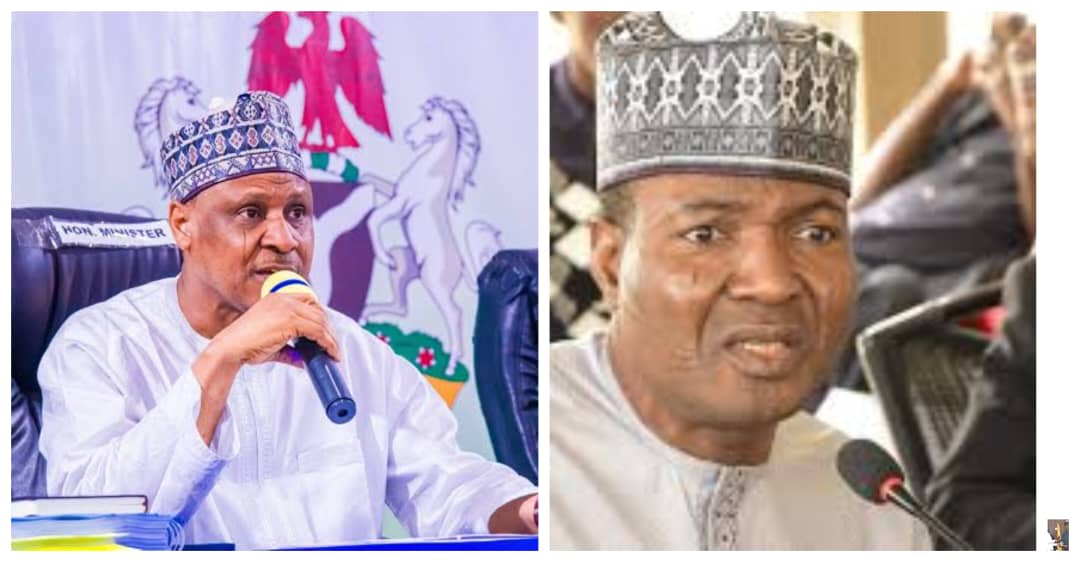
ABUJA — It was meant to be a lifeline: a multi-billion-naira presidential intervention, championed by the Minister of Information and National Orientation, Alhaji Mohammed Idris Malagi, aimed at reviving Nigeria’s embattled state media institutions. Instead, it has ignited a firestorm of accusations whispered in corridors, voiced in staff meetings, and, increasingly, aired in public.
The money, reportedly exceeding N37 billion, was earmarked for Nigeria’s flagship media agencies. But as procurement plans kick into motion, cracks are beginning to show. Inside sources and leaked documents reviewed by Quick News Nigeria reveal troubling signs: hurried contracts, opaque disbursements, and a ministry-wide silence in the face of growing demands for accountability.
“This was supposed to be a turning point,” said one senior staffer at the Nigerian Television Authority (NTA), who spoke on condition of anonymity for fear of reprisals. “Instead, it’s starting to look like another looting spree.”
Behind Closed Doors, Billions Flow
According to multiple insiders across federal media agencies, the allocations were privately disclosed by Minister Malagi during a series of closed-door meetings. The numbers were staggering:
-N10 billion for NTA
-N8 billion for the National Orientation Agency (NOA)
-N7 billion for the Federal Radio Corporation of Nigeria (FRCN)
-N5 billion for the News Agency of Nigeria (NAN)
-N4 billion for Voice of Nigeria (VON)
-N3 billion for the Nigeria Press Council (NPC)
Officially, the funds were intended for high-capacity broadcast equipment, digital IT infrastructure, monitoring tools, and operational upgrades. Unofficially, insiders say, the sudden influx of money triggered a frenzied dash for contracts and, in some cases, alleged kickbacks.
“Last week alone, VON disbursed N50 million to unnamed contractors,” said an official familiar with the agency’s operations. “The procurement head had to be pulled out of a World Bank training just to oversee the so-called ‘priority projects.’ That tells you how frantic it’s become.”
Inflated Claims, Dubious Allowances
Beyond procurement, staff across multiple agencies have raised alarms about questionable expenditures, including inflated Duty Tour Allowances (DTA) and coerced remittances.
“You go on an official trip, file a claim, and then you’re told to return part of it in cash,” said a source within FRCN. “It’s an open secret. Everyone knows, but no one talks.”
Meanwhile, grumblings within Voice of Nigeria (VON) reached a boiling point in Lagos on July 15, when staff held a rare press briefing to air internal grievances. Among them: capricious transfers to “ghost offices” in restive states such as Zamfara and Borno, and spiraling operational costs.
“We are burning through N67 million a month, and that’s just overhead,” one whistleblower claimed. “Where’s the value? What are we achieving?”
Leadership in the Crosshairs
Attention is also turning to the heads of these institutions. At VON, Director-General Alhaji Jibrin Baba Ndace is alleged to have requested N2 million in cash ahead of a foreign trip. Staff also allege that while technical departments languish, the DG continues frequent overseas travel, including a controversial stop in the Middle East.
The Director of Engineering, according to internal sources, has made only one technical visit abroad to China since the fund’s release.
At FRCN, operations are reportedly being run not by the Director-General, but by the Director of Finance and Accounts, Alhaji Musa Bako, amid speculation that the DG is positioning himself for a political run, possibly as a successor to Borno State Governor Babagana Zulum.
Even NAN, ostensibly receiving N5 billion has been cautioned that the amount may be slashed, part of a rumored recalibration that could see FRCN and VON lose N500 million each, while NTA and NOA may forfeit N1 billion apiece.
“No one knows what’s coming next,” said a senior executive at one of the agencies. “The fear now is that they’ll claw back funds arbitrarily, but only after deals have been signed.”
Accountability in Absence
Calls are now growing for a forensic audit. Civil society groups, staff unions, and media watchdogs are demanding urgent investigations by the Auditor-General, the National Assembly, and anti-corruption agencies.
“This is public money, not campaign slush,” said Halima Ogbonna, a program officer at the Abuja-based Centre for Fiscal Transparency. “If these funds disappear, it will set back the public information sector by a decade.”
Efforts to obtain official responses have been stonewalled. The VON DG was reportedly unavailable on Tuesday and locked in undisclosed “high-level meetings” on Wednesday. The Information Minister, sources say, was traveling abroad and later convened a closed strategy session. His official spokesperson did not respond to repeated calls and messages.
To date, neither the Ministry of Information nor any of the affected agencies have issued a formal statement or public breakdown of how the intervention funds are being utilized.
A Cautionary Tale?
What was pitched as a historic investment in Nigeria’s state media now teeters on the edge of scandal. Insiders fear the opportunity may be squandered, not by lack of vision, but by the same rot that has long plagued public administration.
“This was our moment to modernize,” said one agency head who requested anonymity. “Instead, it feels like déjà vu — a rain of naira turning into a flood of shame.”
As the storm brews, the public awaits answers, and hopes for accountability in a system where transparency remains all too rare.
 Stay Informed, Stay Ahead...