
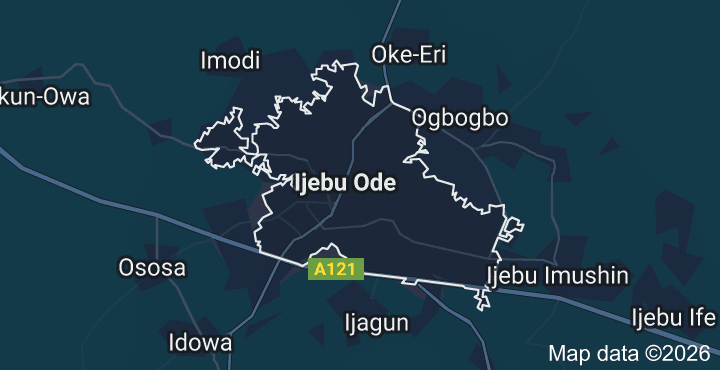
Ijebuland is poised to welcome a new traditional ruler in the next two weeks as the selection process for the next Awujale reaches its peak; however, the milestone is being overshadowed by a deepening crisis of tradition and political interference. The controversy surrounding Dr. Kunle Hassan’s ambition for the stool has escalated into a full-blown historical dispute, fueled by mounting allegations that Fassy Yusuf, a powerful political fixer, played an inglorious role in forcing an unqualified aspirant into the heart of Ijebu’s most sacred succession process.
At the centre of the storm are documented claims made by Dr. Hassan and members of his family. Claims that senior chiefs, palace records and a committee constituted by the late Awujale, Oba Sikiru Kayode Adetona, reportedly dismissed as false, inconsistent and historically untenable. Yet, despite these findings, Dr. Hassan’s name has continued to surface in Awujale succession conversations, a persistence critics now attribute to political smuggling rather than lineage.
A Bid Built on Disputed Royal Descent
Multiple palace sources confirm that the Hassan family formally approached the late Awujale seeking approval to elevate the Otunba Lapoekun of Esugbon chieftaincy to an Obaship stool. Central to their submission was the assertion that Oshinboyejo, founder of Esugbon, was a son of Awujale Afolajoye (Lalujoye), a claim strongly contradicted by established historical records.
Even more controversially, the family reportedly urged the Awujale to retroactively move Awujale Afolajoye from his historically recognised ruling house to the Fusengbuwa Ruling House, the next house due to produce the Awujale.
“Yes, that request was made,” a senior Ijebu chief confirmed. “It was unprecedented, impossible under Ijebu custom, and offensive to the integrity of our history.”
Awujale’s Firm Rejection and the Committee Verdict
Rather than entertain the proposal, Oba Adetona constituted a five-man investigative committee, headed by the Ajalorun of Ijebu Ife, Oba A.A. Oguntuga. According to sources familiar with the process, the Awujale expressly informed the committee that all claims made by the Hassan family regarding Awujale lineage were false and products of imagination.
The committee’s findings were damning. It reportedly concluded that the Hassan family’s submissions were riddled with contradictions, lacked historical foundation and did not justify elevation of the Otunba Lapoekun stool to Obaship.
“The narrative kept changing,” a source close to the investigation said. “That alone disqualified it.”
Obaship by Grant Is Not Royal Blood
Although the Awujale later exercised his prerogative to create the Elesugbon of Esugbon Obaship, a decision still under litigation. Ijebu historians stress that such creation does not confer royal blood nor eligibility for the Awujale throne.
“The Awujale can create or elevate titles,” a traditional historian explained. “But Obaship by grant is not Obaship by birth. It does not insert anyone into a ruling house.”
Contradictions Multiply
Further complications arose when Alhaji Waheed Sanni, a known cousin of Dr. Hassan, publicly asserted that Oshikomaya, not Oshinboyejo, was the first Baale of Esugbon; directly contradicting earlier claims advanced by the Hassan family.
Historical records instead establish that:
Oshinboyejo was a son of Awujale Lapengbuwa (Lalujoye), not Awujale Afolajoye or Jadiara.
Esugbon has three recognised ruling houses- Abata, Oshi and Abemu.
It remains unclear which, if any, of these houses Dr. Hassan belongs to.
“That silence is deliberate,” an Esugbon elder remarked. “Because answering it collapses the claim.”
Otunba, Not Prince
Records also show that Dr. Hassan’s brother was installed as Otunba Lapoekun of Esugbon by the Oloko of Ijebu Mushin, a title historically classified as Ilámùrẹ́n/Pampa, not royal.
“An Awujale prince does not pay ikaro to his father,” a senior chief stated. “Otunba Lapoekun does.”
The 1943 Ijebu Mushin Intelligence Report clearly identifies Lapoekun as a kingmaker title, not a royal one.
Maketi Lineage and Tenant Status
Investigations further suggest that the Hassan family traces ancestry to the Maketi lineage from Oke Ife, Ijebu Ife, a family historically granted asylum in Esugbon as customary tenants at Itun Shebi.
“They paid Edipa and Egbefa levies,” a source said. “Royal settlers do not pay those.”
Conflicting accounts also trail Dr. Hassan’s maternal ancestry, alternately linking it to Itun Iwaye, Esugbon, and Imagbon, deepening doubts about the coherence of the lineage narrative.
Enter Fassy Yusuf: The Political Smuggling Allegation
Despite these historical roadblocks, critics allege that Fassy Yusuf leveraged political influence to smuggle Dr. Hassan into Awujale succession conversations, even though records show he does not belong to any recognised ruling house.
“It seems the governor favours him,” a senior traditional source said, referencing Governor Dapo Abiodun, “but without Fassy Yusuf, this name would never have crossed the threshold.”
Though no official confirmation of government backing has been issued, the persistence of Dr. Hassan’s candidacy, despite committee rejection and historical contradictions, has intensified suspicions of backroom political engineering.
Among critics, condemnation of Fassy Yusuf’s role has been blunt and unsparing. In a rebuke now widely repeated across Ijebu land, opponents warn:
“Fassy Yusuf will not kill Ijebu people overnight with hunger for control of the Awujale stool.”
The phrase reflects deep fears that personal ambition and power brokerage are being prioritised over tradition.
Adding to the controversy is the derisive subtitle now attached to Dr. Hassan in community discourse:
“Omo Alatishe of Fidipote lineage.”
Critics say the label captures what they describe as the absurdity of presenting a figure allegedly linked to Fidipote and Osun-descendant lines as a Fusengbuwa aspirant.
A Throne Under Siege
Traditional authorities warn that allowing political intermediaries to manufacture eligibility would permanently damage Ijebu’s succession system.
“Once you break the rules for one man,” a senior chief cautioned, “you open the throne to everyone.”
For many in Ijebu land, the issue has transcended Dr. Kunle Hassan as an individual and now represents a broader struggle between tradition and political capture.
“This is not about denying ambition,” a historian concluded. “It is about refusing to let power brokers rewrite royalty.”
As tensions rise and litigation continues, custodians of Ijebu heritage insist on one principle: the Awujale stool must remain a crown of inheritance, not a product of insertion, influence or contrivance.
 Stay Informed, Stay Ahead...