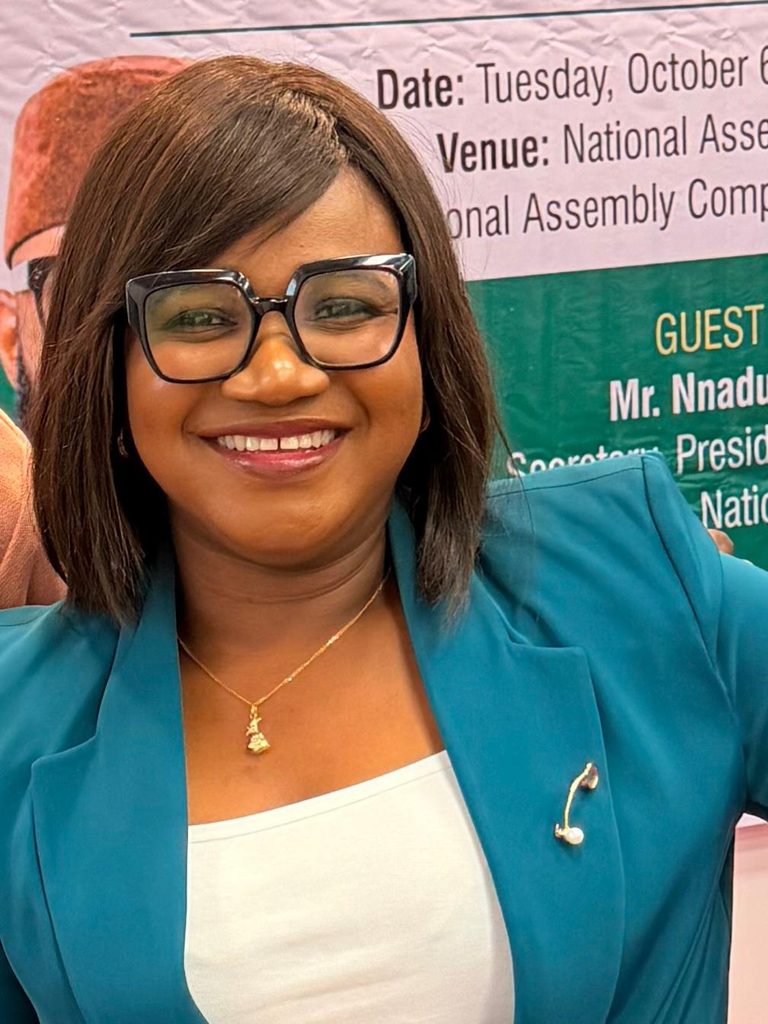
By Moji Danisa
The reported detention of former Kaduna state governor Nasir El-Rufai by the Economic and Financial Crimes Commission over an alleged ₦432bn fraud probe has instantly stirred political calculations far beyond the interrogation room. Though he is said to have honoured the invitation voluntarily, the fact that he remained in custody as questioning continued has raised questions about the possible fallout for the African Democratic Congress coalition, where he had recently emerged as one of the most prominent northern voices.
For the ADC, the development is a test of both credibility and cohesion. El-Rufai brought with him a high national profile, deep connections within the political class and a reputation for political combat. His presence gave the coalition a measure of visibility in the north and helped it project itself as a gathering point for disenchanted political heavyweights. His sudden legal troubles, however, threaten to interrupt that momentum and could deprive the coalition of one of its most recognisable figures at a delicate stage of its growth.
Yet the impact may not be as straightforward as sympathy or solidarity. El-Rufai is a deeply polarising figure, admired by some for his bluntness and administrative drive, and resented by others for a style often described as abrasive and confrontational. His years in office in Kaduna left a mixed legacy, with supporters pointing to reforms and infrastructure, while critics recall policies that generated social tension and political bitterness.
Because of that divided reputation, his detention is unlikely to produce a uniform reaction across northern Nigeria. The region’s politics is shaped by a complex mix of religious leaders, traditional institutions, governors, business elites and party structures. No single political figure commands universal loyalty, and El-Rufai’s record makes him an even less likely rallying point for mass agitation.
Historically, the arrest or investigation of high-profile political figures in Nigeria has rarely triggered widespread unrest. More often, such episodes play out as legal battles and elite political manoeuvres rather than popular uprisings. The immediate reaction tends to be loud in political circles and social media, but quieter on the streets, where economic hardship, insecurity and daily survival weigh more heavily than the fate of individual politicians.
Within elite circles, however, the detention could send ripples. It raises questions about the reach of anti-corruption agencies, the risks associated with shifting political alliances and the boundaries between law enforcement and political rivalry. For opposition figures, it may reinforce suspicions of selective justice; for the government and its supporters, it may be framed as evidence that no one is above scrutiny.
For the ADC coalition, the episode underscores a deeper challenge. Alliances built around strong personalities are vulnerable when one of those figures is suddenly removed from the stage. The durability of the coalition will depend on whether it has a shared ideological core and alternative leadership, or whether it is still largely a platform for ambitious individuals seeking new political homes.
In the short term, El-Rufai’s detention is more likely to produce noise than upheaval – statements from allies and opponents, legal arguments in courtrooms, and intense political messaging on all sides. Whether it becomes a turning point for the ADC, or for northern politics more broadly, will depend less on the arrest itself than on the evidence that emerges, the conduct of the investigation and the shifting alliances that often define Nigeria’s political landscape.
For now, the development looks less like a spark for regional unrest and more like another episode in the country’s familiar cycle of power struggles, investigations and political repositioning. – By Moji Danisa